
Lahsen
A passionate explorer weaving tales of the majestic landscapes and cultural treasures nestled within the rugged beauty of Morocco’s Dades Gorges.
The Significance of Djellabas
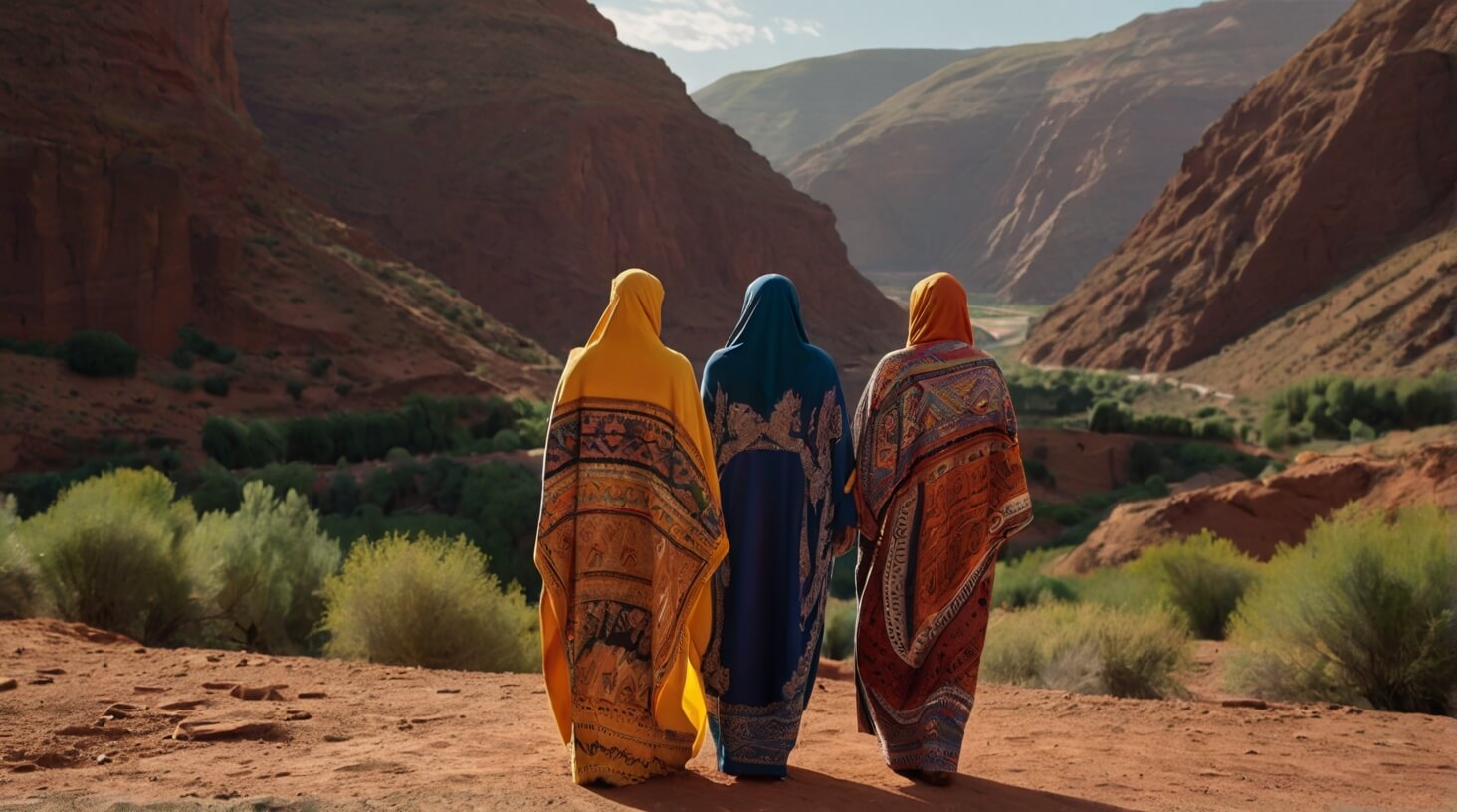
Imagine wandering through the winding pathways of Dades Gorges, where the vibrant colors and intricate patterns of traditional clothing blend seamlessly with the natural beauty of the landscape. You’ll find yourself captivated by the elegance of djellabas and the exquisite detail of caftans, each piece telling a story of cultural heritage and artisanal craftsmanship. As you explore the significance of these garments, along with the art of handwoven Berber rugs and the unique styles of traditional footwear, you’ll uncover the rich tapestry of history and identity woven into the fabric of this region. The question now is, how do these traditional styles reflect the lives and values of the people who wear them?
Adorning the locals of Dades Gorges, djellabas serve not just as traditional attire but embody a rich tapestry of cultural identity and practicality. This garment, while seemingly simple, is a profound expression of the region’s heritage, meticulously crafted through the art of djellaba tailoring. As you delve into the essence of these garments, you’ll find that their creation is a meticulous process that begins with careful fabric sourcing. It’s not merely about finding material; it’s about selecting fabrics that breathe life into the tradition, ensuring both durability and comfort in the arid climate of Dades Gorges.
The process of djellaba tailoring is as much about preserving tradition as it is about innovation. Tailors, often with skills passed down through generations, work with precision to create garments that reflect the wearer’s identity and status. They’re not just sewing clothes; they’re weaving the cultural fabric of their community. Fabric sourcing, therefore, becomes a critical step in this process. It’s about choosing materials that resonate with the values of freedom and adaptability, ensuring that each djellaba is both a work of art and a testament to the enduring spirit of the people.
In exploring the significance of djellabas, you’re not just looking at a piece of clothing. You’re witnessing a symbol of resilience, a marker of identity, and a carrier of stories. Through the meticulous processes of djellaba tailoring and fabric sourcing, the artisans of Dades Gorges offer the world a lesson in preserving culture while embracing the freedom to adapt and evolve.
The Beauty of Caftans
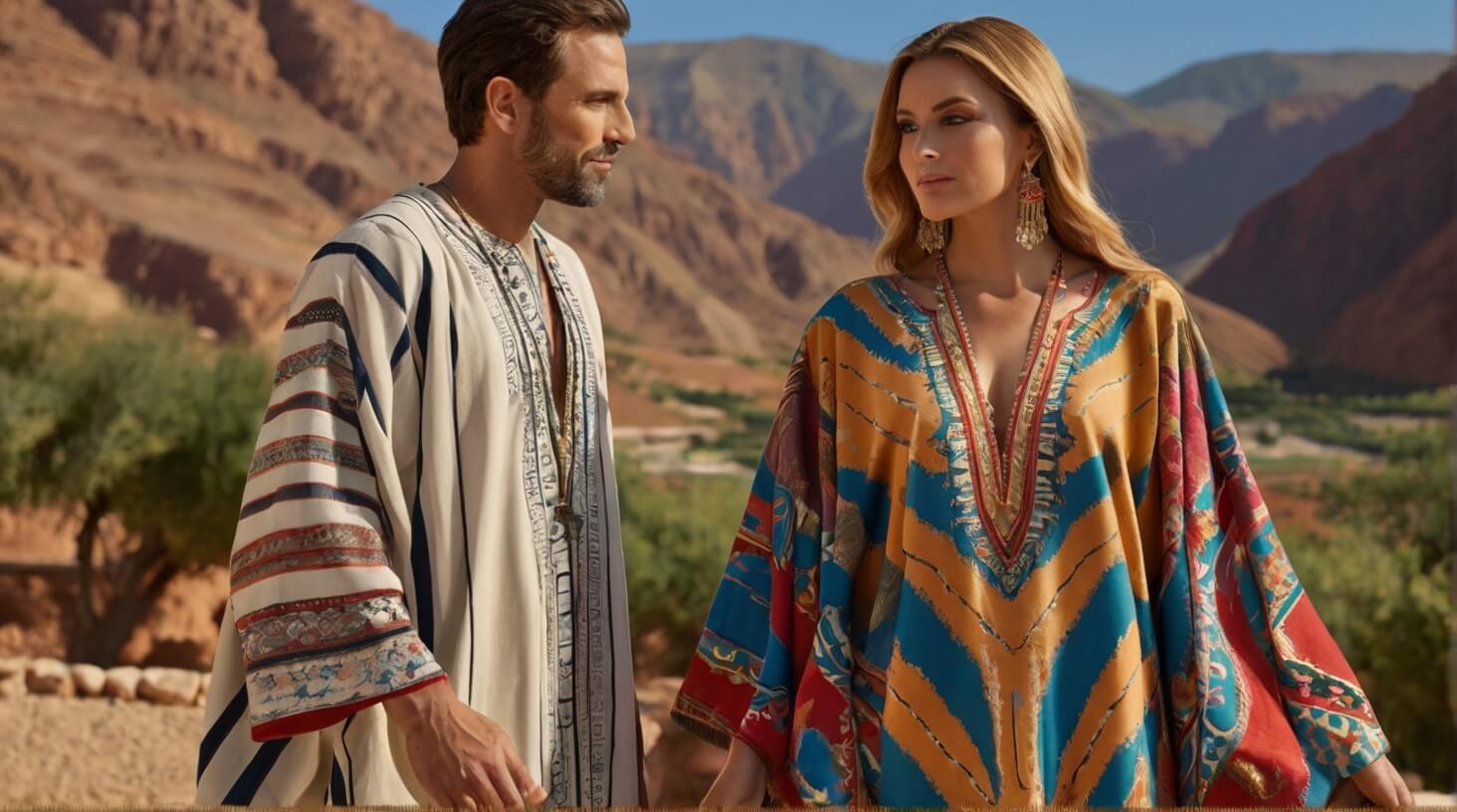
While exploring the rich tapestry of Dades Gorges’ traditional attire, you’ll find that caftans, much like djellabas, are not just garments but profound expressions of cultural identity and aesthetic elegance. These flowing pieces are more than mere clothing; they’re artworks, embodying the freedom and creativity of their makers and wearers alike.
Diving deeper, you’ll discover that caftan colors play a crucial role in their beauty. They range from the earthy tones that echo the desert’s hues to vibrant shades that mirror the bustling souks. These colors aren’t chosen at random but are carefully selected to convey specific meanings, celebrate occasions, or simply to reflect the wearer’s mood and style. The freedom to choose from such a broad palette allows individuals to express themselves uniquely and vibrantly.
Equally important are the embroidery techniques that adorn these caftans. Master artisans employ a variety of stitches, some so intricate they seem to tell stories of their own. This embroidery isn’t just decoration; it’s a language of its own, communicating the wearer’s status, region, and even familial ties. The meticulous detail in each stitch exemplifies a dedication to preserving a craft that’s been passed down through generations.
As you wrap yourself in a caftan, you’re not just wearing a piece of fabric. You’re embracing a centuries-old tradition, a testament to the region’s rich culture and the artisans’ boundless creativity. The caftan’s beauty lies not just in its appearance but in its ability to connect us to a deeper sense of freedom and identity.
Handwoven Berber Rugs
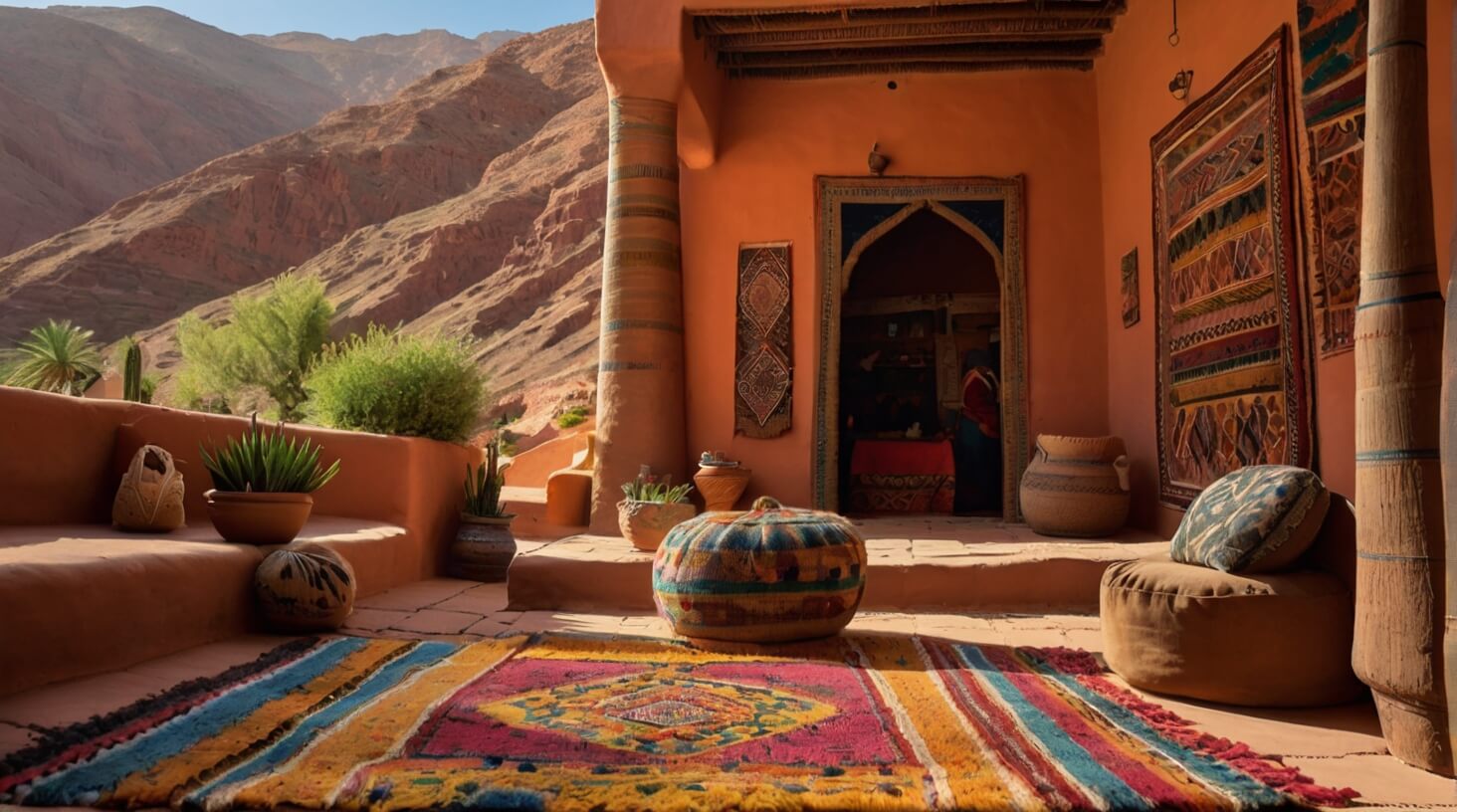
In the tapestry of Dades Gorges’ cultural heritage, handwoven Berber rugs stand out as vibrant threads, embodying centuries of tradition and the meticulous craftsmanship of the Amazigh people. These rugs aren’t just decor; they’re a testament to the weavers’ freedom to express their identity, stories, and connection to the land. The weaving techniques involved are passed down through generations, each rug a narrative woven into existence with care and precision.
You’d find that the creation of these rugs is a process steeped in tradition, yet vibrant and alive. The weavers employ a variety of techniques, each contributing to the rug’s unique texture and design. Knotting, flat-weaving, and embroidery converge, transforming simple wool into intricate patterns and motifs that speak of the weaver’s heritage and the community’s collective memory.
The dyeing processes further add depth to this narrative. Natural ingredients found in Dades Gorges, such as plants, minerals, and sometimes even insects, are used to produce a palette that’s both rich and earthy. This not only underscores the rugs’ connection to the natural world but also highlights the weavers’ ingenuity in utilizing available resources to manifest their vision.
As you delve deeper into the world of handwoven Berber rugs, you’re not just observing a craft; you’re witnessing a culture’s resilience, creativity, and unwavering commitment to preserving its heritage. These rugs, with their intricate designs and vibrant colors, symbolize the freedom of the Amazigh people to maintain and celebrate their traditions, offering the world a glimpse into the soul of Dades Gorges.
Traditional Footwear Styles
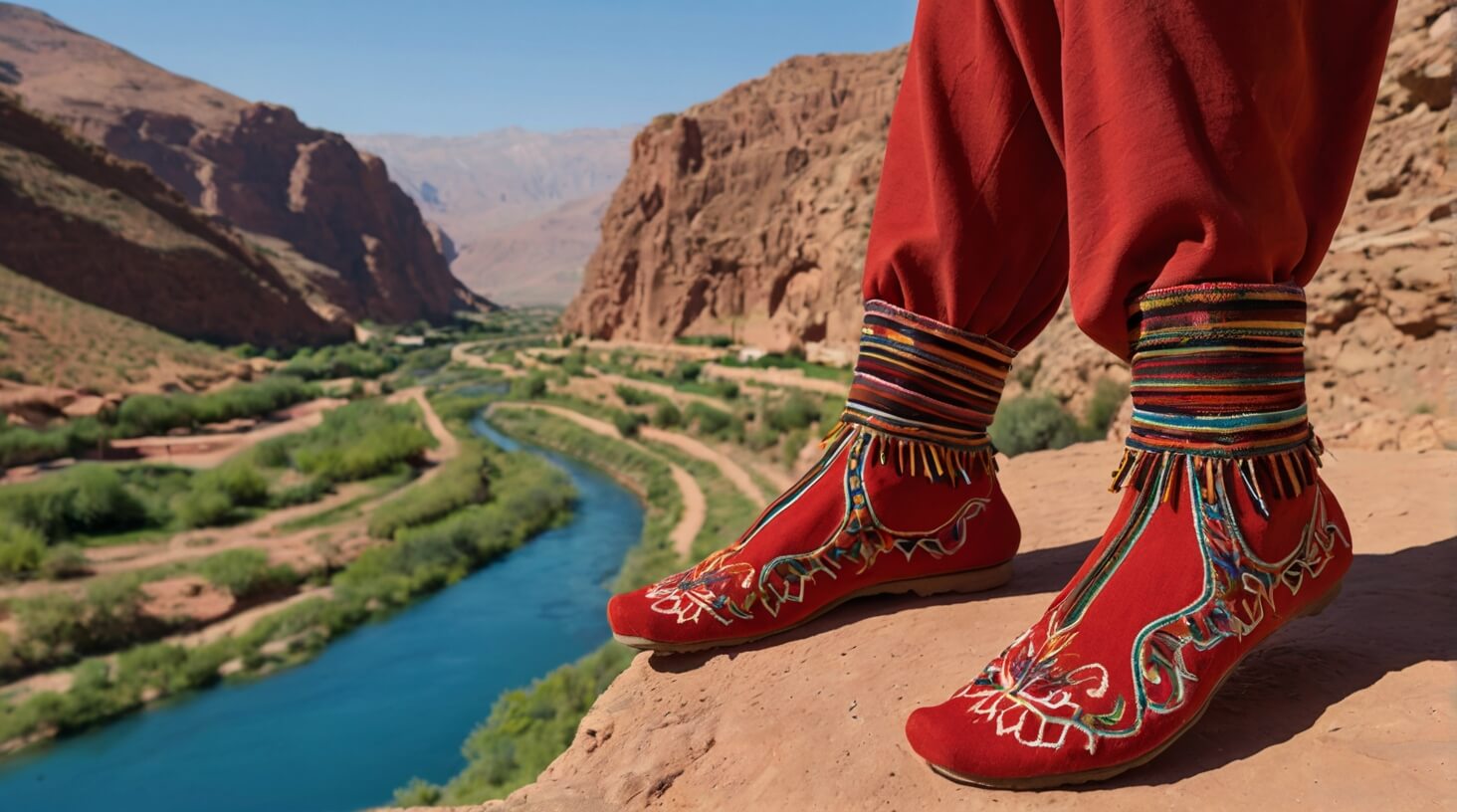
As you explore the traditional footwear styles of Dades Gorges, you’ll uncover the remarkable evolution of historical footwear, from its rudimentary beginnings to more sophisticated forms. You’ll learn about the common materials used, highlighting their significance in both durability and cultural identity. Furthermore, the distinction between ceremonial and daily wear shoes offers insight into the social customs and practicalities of past lifestyles in the region.
Historical Footwear Evolution
Historically, residents of Dades Gorges have often crafted footwear that not only reflects their cultural identity but also adapts ingeniously to their rugged terrain. As you explore this evolution, you’ll notice how modern influences and advancements in footwear technology have seamlessly woven into the fabric of traditional designs. This blend represents a dynamic narrative of adaptation and resilience. Traditional styles, which once solely relied on local materials and age-old techniques, have gradually incorporated modern durability and comfort features. This evolution showcases a community that values its heritage while embracing the benefits of innovation. As you delve deeper, you’ll appreciate how this historical progression of footwear not only tells a story of cultural pride but also of a forward-looking adaptability, marrying the past with the present in a harmonious dance of form and function.
Common Materials Used
Exploring the evolution of traditional footwear in Dades Gorges reveals that local materials play a crucial role in crafting styles that are as durable as they are culturally significant. The artisans here have long sourced fabrics and materials directly from their environment, a testament to their ingenuity and respect for nature. Leather, obtained from local livestock, serves as the primary component, celebrated for its longevity and ability to adapt to the wearer’s foot. Natural dyes, derived from plants and minerals, imbue these shoes with colors rich in cultural significance. Each hue tells a story, reflecting the community’s values and beliefs. This deliberate choice of materials and color significance underscores a deep connection between the people of Dades Gorges and their land, showcasing a blend of functionality and symbolic expression through their traditional footwear.
Ceremonial Vs Daily Wear
In the realm of traditional footwear in Dades Gorges, a clear distinction emerges between the styles designated for daily wear and those reserved for ceremonial occasions, each reflecting the community’s cultural ethos and practical needs. For daily activities, you’ll find shoes crafted from durable materials, prioritizing comfort and longevity. The fabric choices are often subdued, aligning with the practical aspect of day-to-day life. Conversely, ceremonial footwear is a vibrant display of cultural identity, where color symbolism plays a pivotal role. Reds and golds signify prosperity and joy, intricately woven into designs that tell stories of heritage and belonging. These shoes are not just for walking; they’re a testament to the rich tapestry of life in Dades Gorges, embodying both the mundane and the sacred.
Accessories and Jewelry
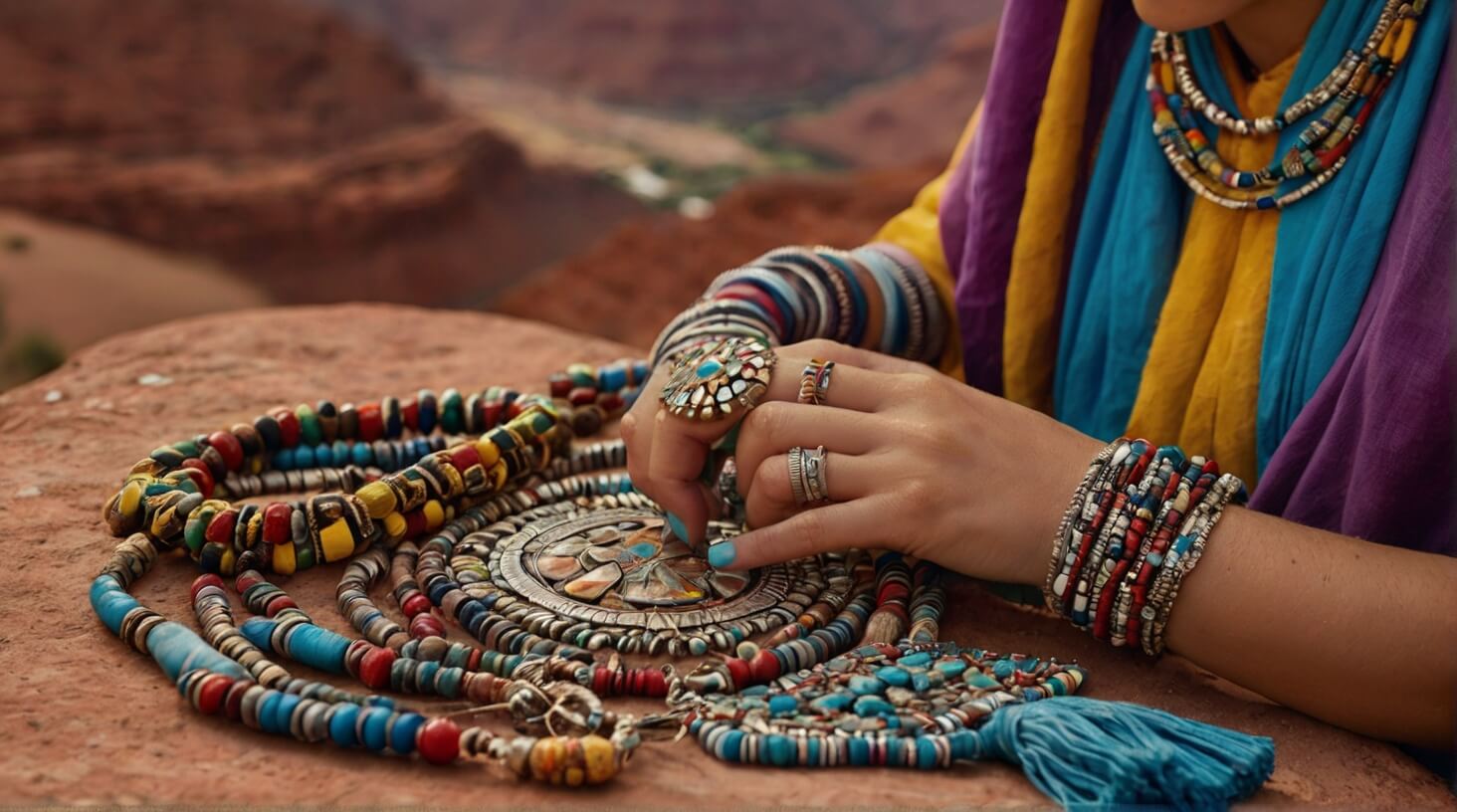
As you explore the traditional clothing styles of Dades Gorges, you’ll find that accessories and jewelry aren’t merely decorative; they carry deep symbolic significance. The jewelry, often crafted from silver and adorned with intricate designs, serves as a testament to the wearer’s heritage and social status. Meanwhile, popular accessories complement these pieces, adding layers of meaning and beauty to the traditional attire.
Symbolic Jewelry Significance
Jewelry in Dades Gorges isn’t just ornamental; it carries deep symbolic significance, reflecting personal identities and cultural values. The intricate pieces you adorn yourself with are more than just beautiful accessories; they’re a testament to the rich history and heritage of this region. Through artisan techniques, each piece is meticulously crafted, embodying centuries-old traditions that speak volumes about the wearer’s roots and the community’s spirit of cultural preservation. These adornments serve as a bridge between the past and present, ensuring that the stories and significance embedded within them aren’t lost to time. By choosing to wear such symbolic jewelry, you’re not only enhancing your aesthetic appeal but also actively participating in the safeguarding and celebration of an invaluable cultural legacy.
Popular Accessories Overview
Building on the significance of symbolic jewelry, let’s explore the broader array of popular accessories that adorn the people of Dades Gorges, each piece resonating with cultural depth and artisanal craftsmanship.
- Headgear Trends: The diverse headgear, ranging from vibrant turbans to intricately woven hats, isn’t just a fashion statement; it’s a narrative of identity and heritage. Each color and pattern holds a story, a testament to the wearer’s lineage and the community’s history.
- Color Symbolism: The use of specific hues in accessories isn’t arbitrary. Reds signify strength and resilience, greens embody peace and prosperity, while blues reflect wisdom and serenity. This color symbolism adds layers of meaning to each accessory, transforming them into silent communicators of personal and collective values.
- Handcrafted Amulets: Beyond their aesthetic appeal, these amulets serve as guardians, believed to protect the wearer from negative energies. Their intricate designs are not just visually captivating; they’re imbued with centuries of lore and belief.
In Dades Gorges, accessories are more than adornments; they’re emblems of freedom, a celebration of cultural identity through the art of personal expression.
Seasonal Clothing Variations
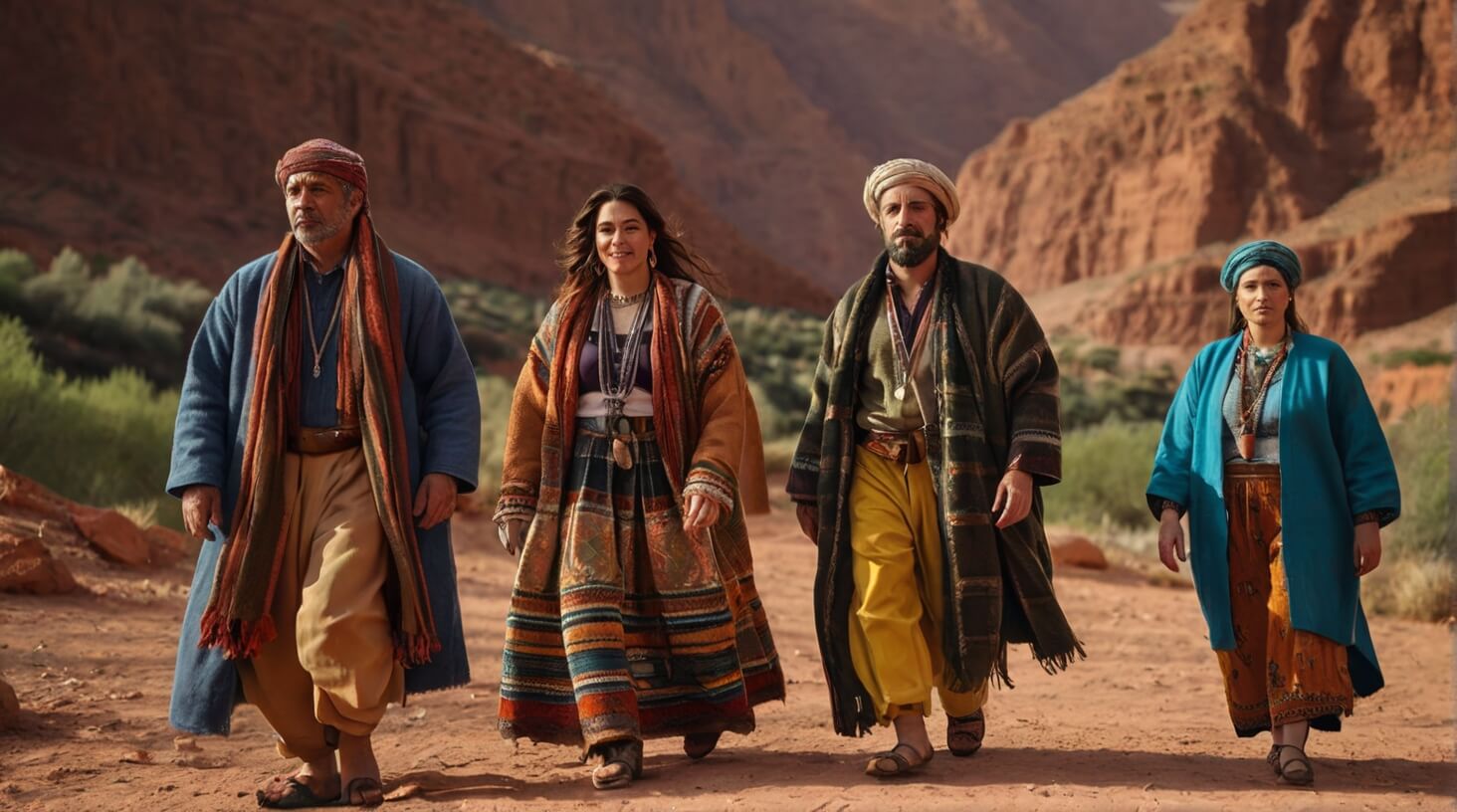
The traditional clothing of Dades Gorges undergoes distinct variations with the changing seasons, reflecting the area’s cultural adaptability and environmental demands. Weather adaptation isn’t just a practical consideration; it’s a testament to the people’s resilience and their deep connection to nature. As temperatures fluctuate, so do the colors and fabrics of their attire, embodying color significance in a way that’s both symbolic and functional. In the sweltering heat of summer, you’ll find lighter fabrics and brighter colors, reflecting the sun’s harshness and the community’s vibrant spirit. These choices aren’t arbitrary; they’re deeply rooted in a desire for freedom, a freedom to express identity and adapt to the earth’s rhythms.
Come winter, the transformation is stark. Heavier, darker clothing takes precedence, a practical adaptation to the cold yet also a visual reflection of the season’s introspective mood. This shift isn’t just about staying warm; it’s a cultural dialogue with the elements, a way of life that respects and responds to the natural world’s cyclical changes.
This seasonal dance of colors and fabrics tells a story of survival and identity, where each thread weaves together the past and present. It’s a narrative that speaks to the heart of human adaptability, a visual feast that celebrates the community’s enduring spirit and its unfettered connection to the land. In Dades Gorges, clothing isn’t just what you wear; it’s a declaration of freedom, an ode to the earth, and a testament to the enduring strength of tradition.
Related Articles
Ancient Civilizations of Dades Gorges
Chronicle the ancient civilizations of Dades Gorges, where enigmatic rock art and architectural marvels hint at untold stories of human resilience.

Folklore and Legends of Dades Gorges
Get lost in the enchanting folklore and legends of Dades Gorges, where ancient tales whisper secrets waiting to be discovered.
Cultural Festivals Celebrated in Dades Gorges
Journey through Dades Gorges' cultural festivals to uncover the heart of Moroccan traditions and festivities that beckon the world.