
Lahsen
A passionate explorer weaving tales of the majestic landscapes and cultural treasures nestled within the rugged beauty of Morocco’s Dades Gorges.
Ancient Geological Formations
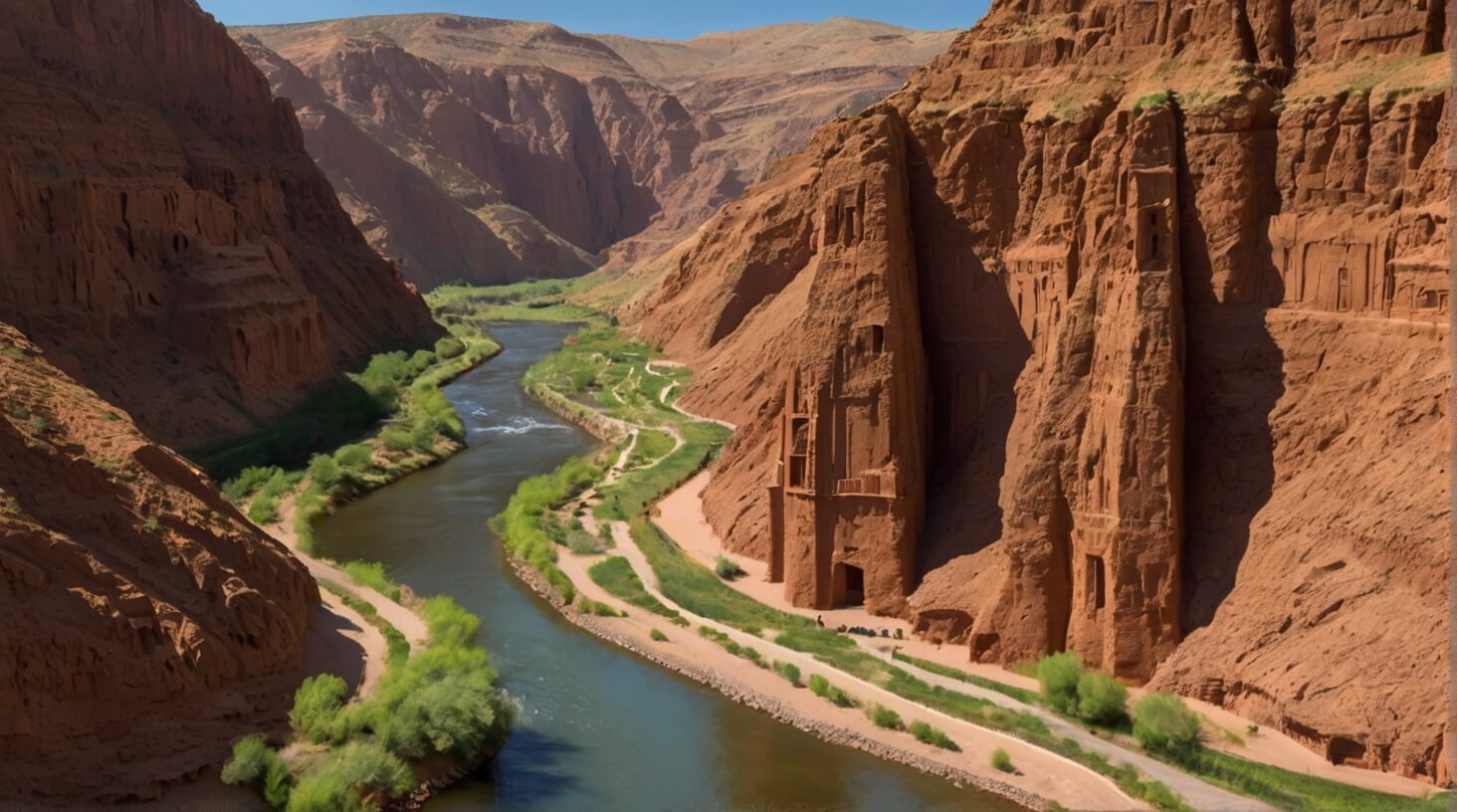
When you visit Dades Gorges in Morocco, you’re immediately struck by its towering red cliffs, a result of millions of years of erosion. This breathtaking landscape didn’t form overnight; it’s the product of ancient geological formations, the relentless force of water, the sculpting power of wind, and even the influence of climatic changes over millennia. You’ve also got human activities that have subtly altered its façade. As you stand at the edge, peering into the depths carved by nature and time, you might wonder about the forces that shaped this natural wonder. Unraveling its erosion history offers a journey through time, revealing the earth’s dynamic character and how even the mightiest structures bow to the forces of nature. Why do these gorges look the way they do, and what can they tell us about our planet’s past and future?
The ancient geological formations of the Dades Gorges, sculpted over millions of years, reveal a complex history etched into the very bedrock of the Earth. You’re venturing into a realm where plate tectonics and volcanic activity have played pivotal roles in shaping the landscape you see today. The Dades Gorges stand as a testament to the earth’s dynamic processes, showcasing the relentless power of geological forces.
Delving deeper, it’s essential to understand that the Earth’s lithosphere is broken into tectonic plates that are constantly in motion. The interactions of these plates have profound impacts on the planet’s surface. In the case of the Dades Gorges, the collision of the African and Eurasian plates has been a significant factor. This colossal tectonic activity forced the land upwards, creating the High Atlas Mountains, within which the gorges reside.
Moreover, volcanic activity has contributed to the gorges’ formation by depositing layers of igneous rock amidst the sedimentary layers. These volcanic rocks, resistant to erosion, have played a crucial role in defining the rugged landscape of the gorges. As these plates moved and shifted, magma from the Earth’s mantle erupted through the crust, cooling and solidifying to add another layer to the geological history of the area.
You’re observing a landscape that’s an open book of Earth’s geological past, where each layer tells a story of immense pressure, heat, and movement. The Dades Gorges’ ancient formations are not just rocks; they’re records of the Earth’s relentless quest for freedom, continually reshaping itself through the forces of plate tectonics and volcanic activity.
The Role of Water
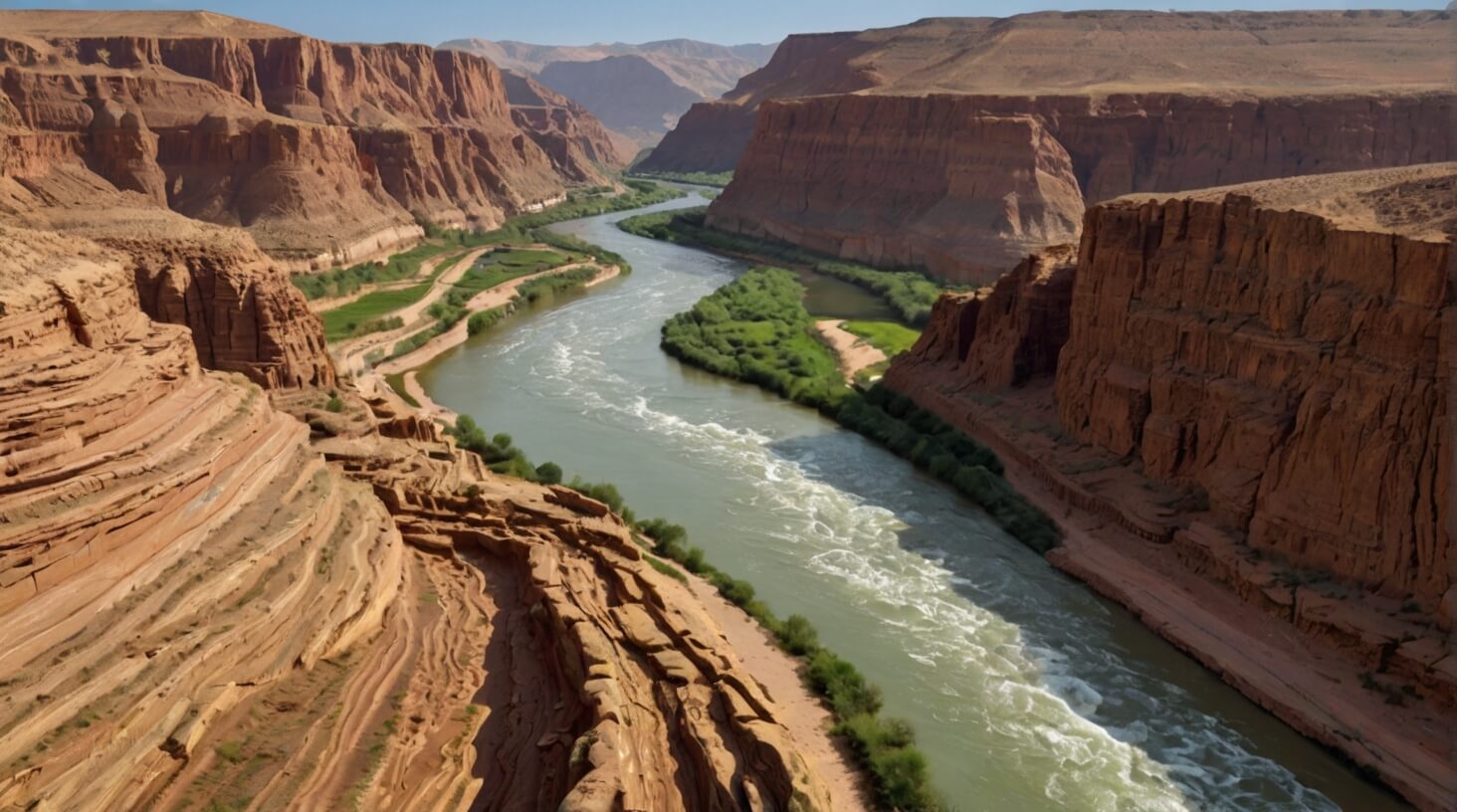
Amidst the geological marvels of Dades Gorges, water’s role as a sculptor is both profound and intricate, carving through rock layers with relentless force over millennia. As you explore the erosion history, it’s essential to understand how water isn’t just a passive element but an active agent in shaping the landscape.
Sediment transport, a critical process within the gorges, demonstrates water’s power to mobilize and rearrange the earth. Here’s where the technicality of it all comes into play: as water flows, it picks up particles—ranging from fine silt to larger rocks—moving them downstream. This action not only deepens the gorges but also redistributes sediments in a way that continuously alters the terrain. It’s a process that’s both destructive and creative, contributing to the gorges’ ever-evolving beauty.
Flood dynamics add another layer of complexity to water’s role. You might not think about it day-to-day, but flood events, though sporadic, have a profound impact on the landscape. During these events, the water’s volume and velocity increase dramatically, enhancing its ability to erode rock and transport sediment. These floods can carve out new channels, widen existing ones, and even create natural dams by depositing large amounts of debris.
What you’re witnessing in the Dades Gorges is the result of countless such events, each one leaving its mark on the landscape. It’s a testament to the power of water to shape our world, acting not just over years or decades, but over geologic time scales. As you delve deeper into the erosion history, keep in mind the dynamic and powerful role water plays in sculpting the earth beneath our feet.
Wind’s Sculpting Power
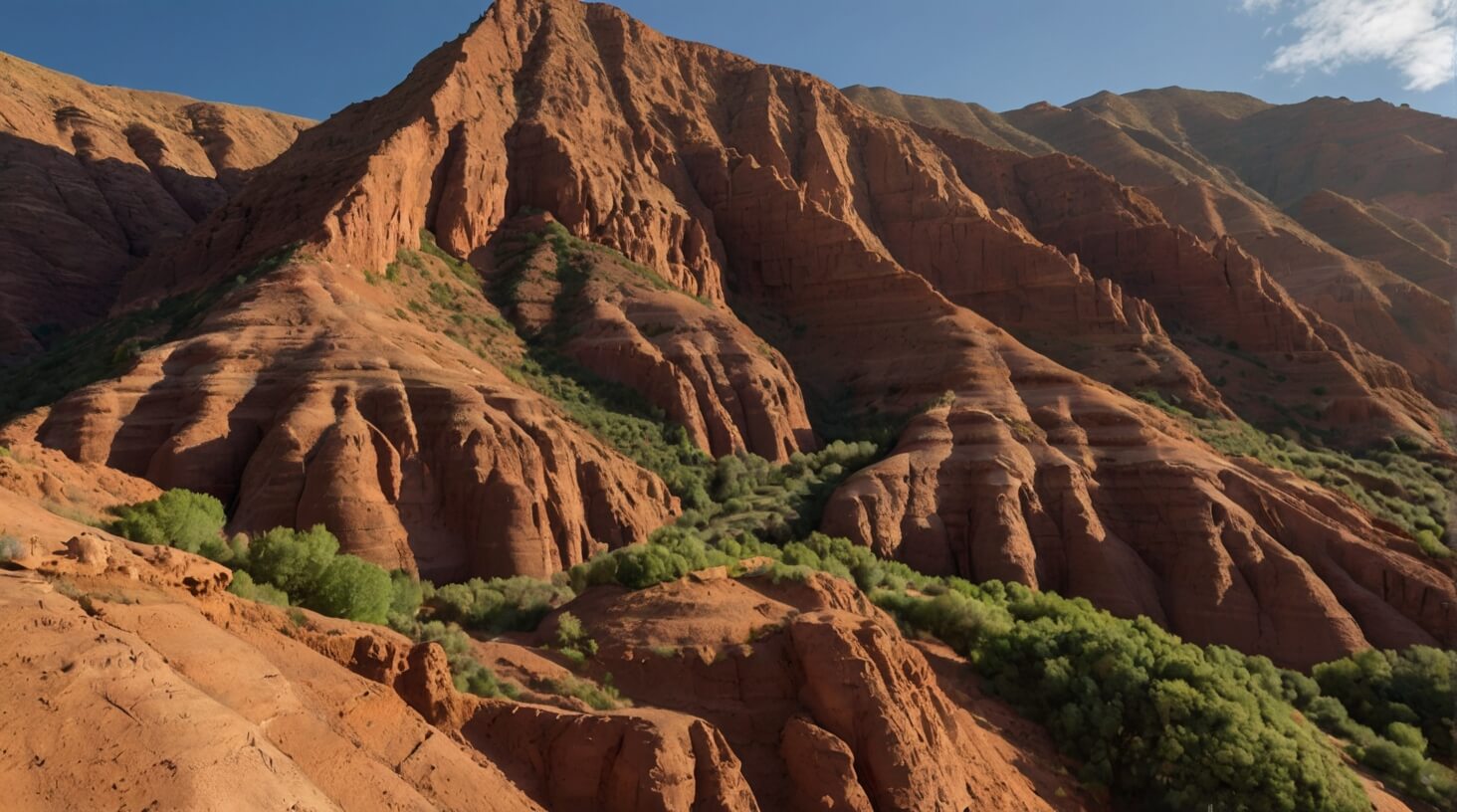
You’ll find that wind has played a pivotal role in shaping the Dades Gorges, acting not just as a force of destruction but also of creation. Through wind erosion mechanisms, it’s as if nature has wielded its own chisel, meticulously sculpting the landscape over millennia. This process is a testament to nature’s artistic influence, transforming rock and earth into breathtaking formations that captivate anyone who lays eyes on them.
Wind Erosion Mechanisms
Wind erosion, a powerful sculpting force, often reshapes landscapes by abrasively stripping away soil and rock surfaces through a process known as deflation. You’ll find that in Dades Gorges, this mechanism is at the heart of its evolving beauty. The relentless wind doesn’t just wear down the earth; it also redistributes particles, leading to dust accumulation in some areas while exposing and polishing rock surfaces in others. The erosion rates thereby fluctuate significantly, influenced by wind speed, vegetation cover, and the inherent resistance of the geological formations.
| Factor | Impact on Erosion |
| Wind Speed | Increases rate |
| Vegetation Cover | Decreases rate |
| Rock Hardness | Varies rate |
Understanding these mechanisms gives you insight into the natural forces shaping our world, emphasizing the wind’s role in crafting the breathtaking landscapes of Dades Gorges.
Nature’s Artistic Influence
Having explored how wind erosion shapes the landscape of Dades Gorges, it’s crucial to examine its role as nature’s sculptor, artistically carving the terrain. The wind’s influence extends beyond mere erosion, actively participating in the creation of a dynamic ecosystem. Here are the key ways it does so:
- Floral Adaptations: Wind shapes plant life, encouraging the development of resilient species that can withstand its force.
- Animal Pathways: The sculpted landforms create unique habitats, guiding animal movements and influencing migration patterns.
- Erosional Artistry: Wind erosion uncovers and shapes geological formations, crafting natural sculptures.
- Microclimate Creation: The altered landscape fosters the development of microclimates, supporting diverse life forms.
This intricate dance between wind and terrain underscores the gorges’ ever-evolving beauty, a testament to nature’s unfettered creativity.
Climatic Influence Over Millennia
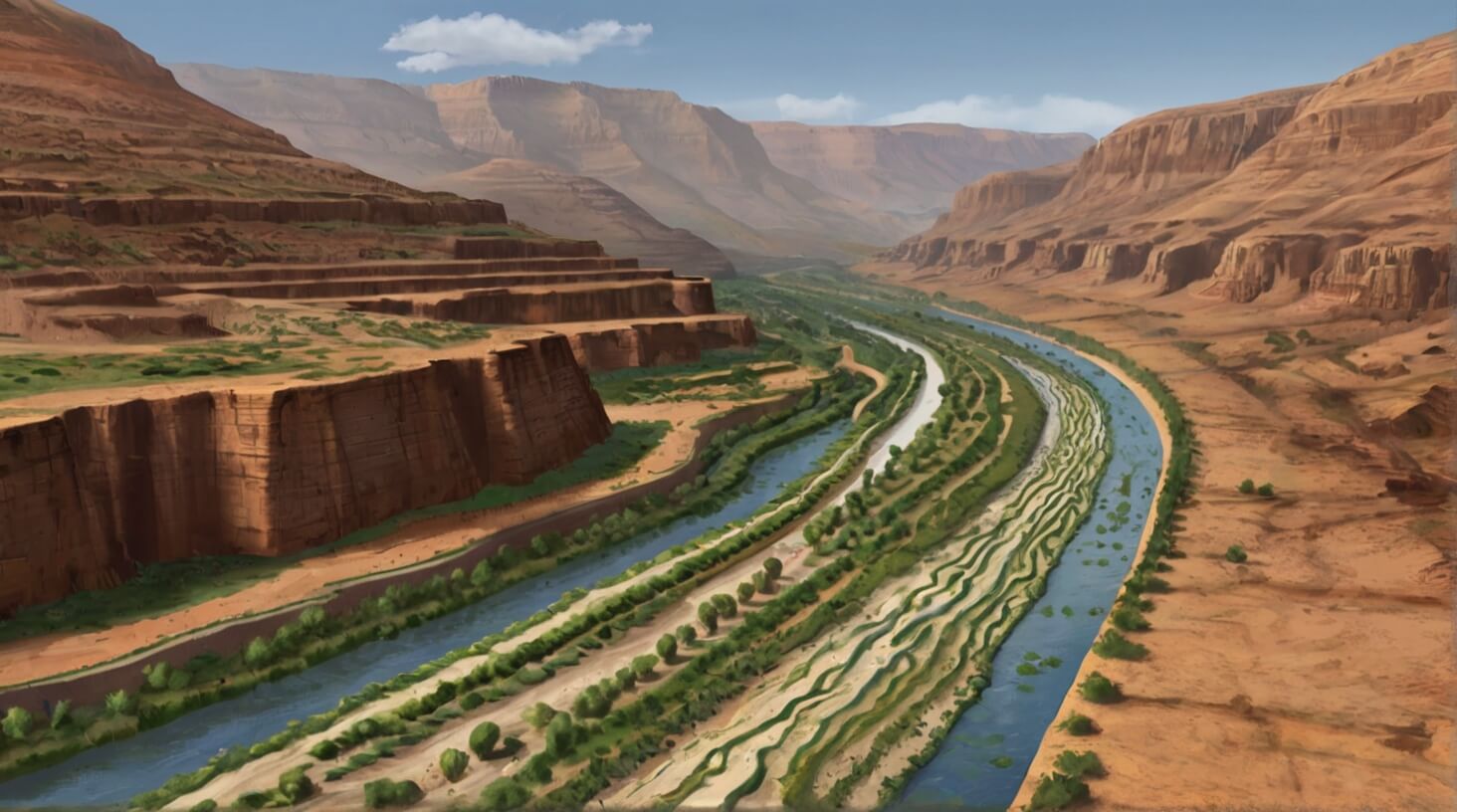
Over millennia, the climatic changes have significantly shaped the geological and biological landscape of the Dades Gorges. Temperature variations and shifts in vegetation cover have left indelible marks on the canyon’s features, illustrating a vivid history of adaptation and transformation. As you delve into the climatic influence over these vast stretches of time, it’s crucial to understand how these factors interact in a dynamic and sometimes volatile dance.
The influence of temperature variations cannot be understated. Periods of intense heat and cold have alternately expanded and contracted the rock formations, leading to the creation of fissures and the eventual breaking apart of significant sections. This mechanical weathering, compounded over thousands of years, has contributed to the sculpting of the gorges’ majestic and rugged terrain.
Equally influential has been the vegetation cover, which has fluctuated dramatically in response to climatic shifts. During wetter, more temperate epochs, dense vegetation helped to stabilize the soil and rock, reducing the rate of erosion. Conversely, during drier periods, the lack of plant life left the landscape vulnerable to wind and water erosion, accelerating the canyon’s deepening and widening.
Analyzing these climatic factors offers a window into the past, providing insights into the natural forces that have molded the Dades Gorges over millennia. It’s a testament to the power of nature’s elements in shaping the earth’s surface, underscoring the importance of understanding these processes in the context of both geological history and future climatic challenges.
Human Impact on Erosion
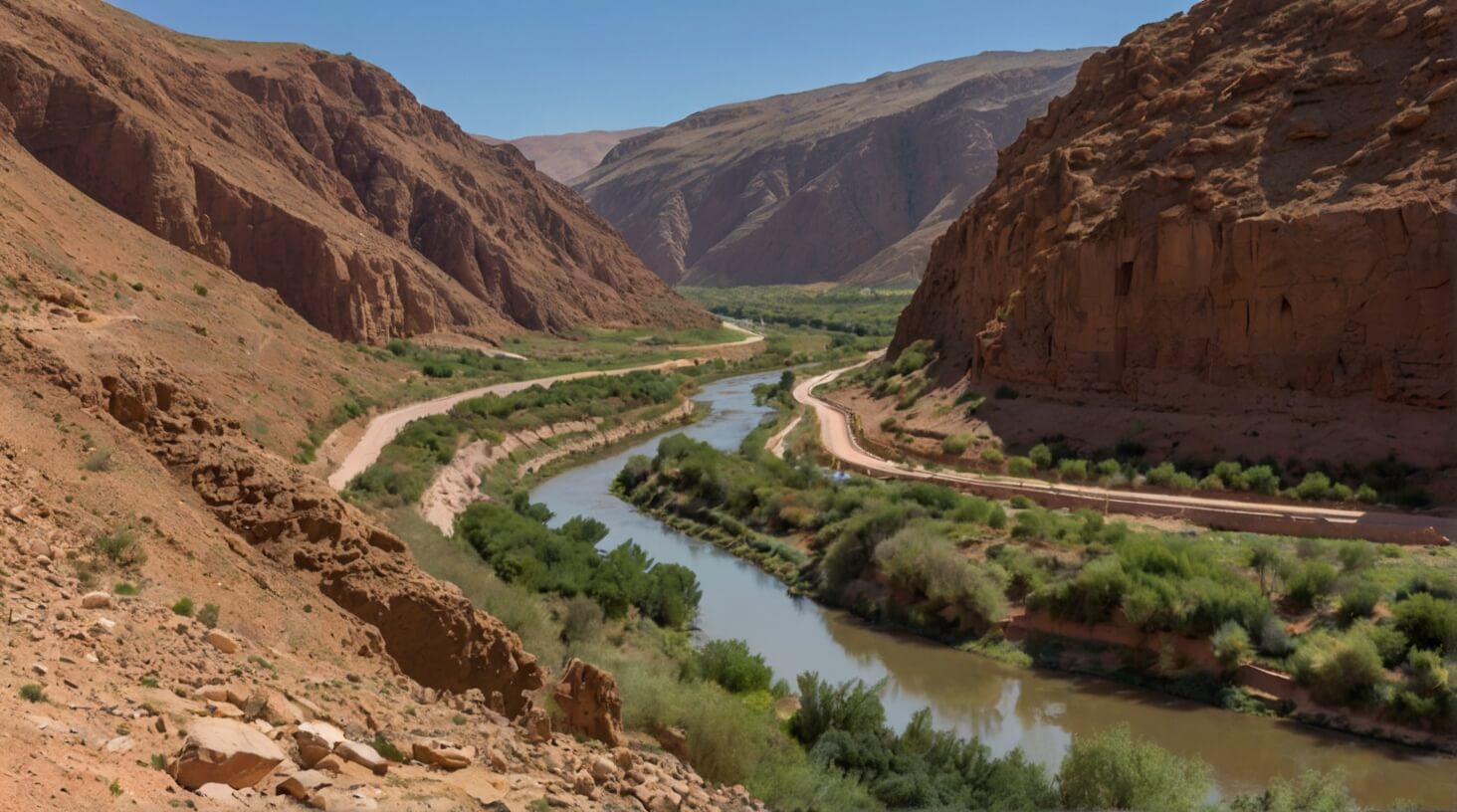
While climatic factors have historically shaped the Dades Gorges, human activities in recent centuries have increasingly influenced erosion patterns in the region. You’ve seen how natural forces carve landscapes over millennia, but now it’s crucial to examine how your actions are accelerating these processes. The interplay between human endeavors and the natural world has led to a complex web of consequences, especially regarding erosion.
Understanding the human impact involves dissecting several key areas:
- Agricultural Practices: Traditional farming methods have evolved dramatically, with intensified agricultural activities contributing to soil degradation. The clearing of vegetation for farming exposes the soil to the elements, making it more susceptible to erosion. This loss of topsoil reduces the land’s fertility, creating a vicious cycle of increased land use to maintain yields.
- Irrigation Techniques: Modern irrigation practices, while beneficial for crop yields, can lead to the alteration of natural water courses. This not only affects the water availability downstream but also accelerates erosion by weakening river banks and nearby slopes.
- Urban Development: The expansion of urban areas into the Dades Gorges has led to significant land alteration. Construction activities strip the land of its natural vegetation cover, increasing runoff and soil erosion. The impermeable surfaces of urbanized areas exacerbate these effects by preventing natural water absorption into the ground.
- Infrastructure Construction: Roads, bridges, and dams, essential for human connectivity and water management, have unintended consequences on the natural erosion processes. These structures can divert natural water flows, leading to increased erosion in some areas while reducing it in others, significantly altering the landscape.
Your understanding of these factors is vital. It’s through this lens that you can appreciate the delicate balance between advancing human needs and preserving the natural beauty and integrity of the Dades Gorges.
The Present Landscape
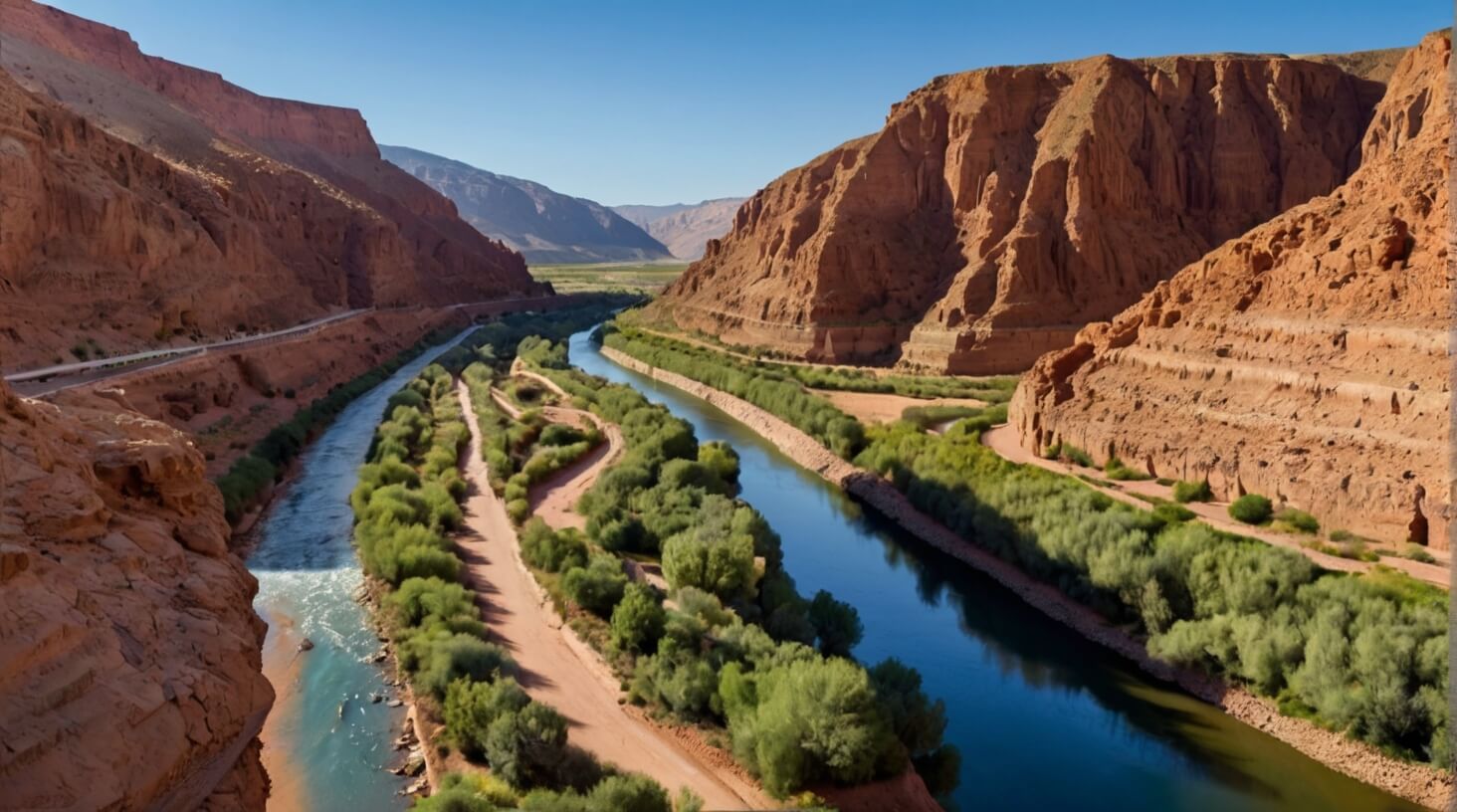
As you observe the Dades Gorges today, it’s evident that the cumulative impact of human activities has significantly reshaped its landscape. The once remote and untouched valleys have transformed into bustling tourist attractions, yet they retain a certain untouched beauty that captivates your sense of freedom. This transformation is not just a testament to the area’s resilience but also highlights the delicate balance between preservation and human curiosity.
To understand the present landscape, let’s dissect the components that make Dades Gorges a unique ecosystem:
| Feature | Description | Impact on Landscape |
| Flora Diversity | Home to endemic species and unique vegetation. | Enhances ecological value and adds to the visual appeal. |
| Tourist Attractions | Well-marked trails, viewing platforms, and local tours. | Increases foot traffic but generates funds for conservation. |
| Geological Formations | Striking rock formations sculpted over millennia. | Attracts scientific research and tourism. |
| Water Sources | Rivers and streams carving through the gorges. | Essential for local biodiversity and provides scenic beauty. |
| Human Settlements | Communities adapted to the rugged terrain. | Introduces challenges for sustainable development. |
Analyzing the present landscape through this table, it’s clear that the Dades Gorges are much more than just a scenic backdrop. They’re a complex interplay of natural beauty and human interaction, where flora diversity thrives alongside tourism, and geological wonders tell the story of time itself. This coexistence, while challenging, offers a blueprint for harmonizing human activities with nature’s rhythm, ensuring that the freedom to explore and appreciate such wonders is preserved for generations to come.
Related Articles
Age of Dades Gorges Rock Layers
Learn the ancient secrets of Dades Gorges' rock layers, where every stratum whispers tales from deep time, inviting curiosity and exploration.
Archaeological Findings in Dades Gorges
Immerse yourself in the mystery of Dades Gorges' ancient civilizations, where each artifact whispers secrets of a forgotten past.
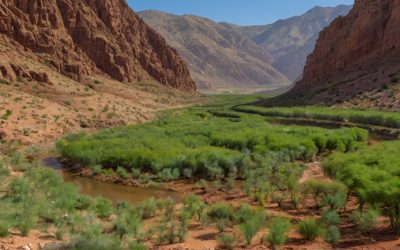
Ecosystems Affected by Dades Gorges Geology
Peek into how Dades Gorges' unique geology shapes its vibrant ecosystems, inviting exploration into the delicate balance of life within.