
Lahsen
A passionate explorer weaving tales of the majestic landscapes and cultural treasures nestled within the rugged beauty of Morocco’s Dades Gorges.
The Precambrian Foundation
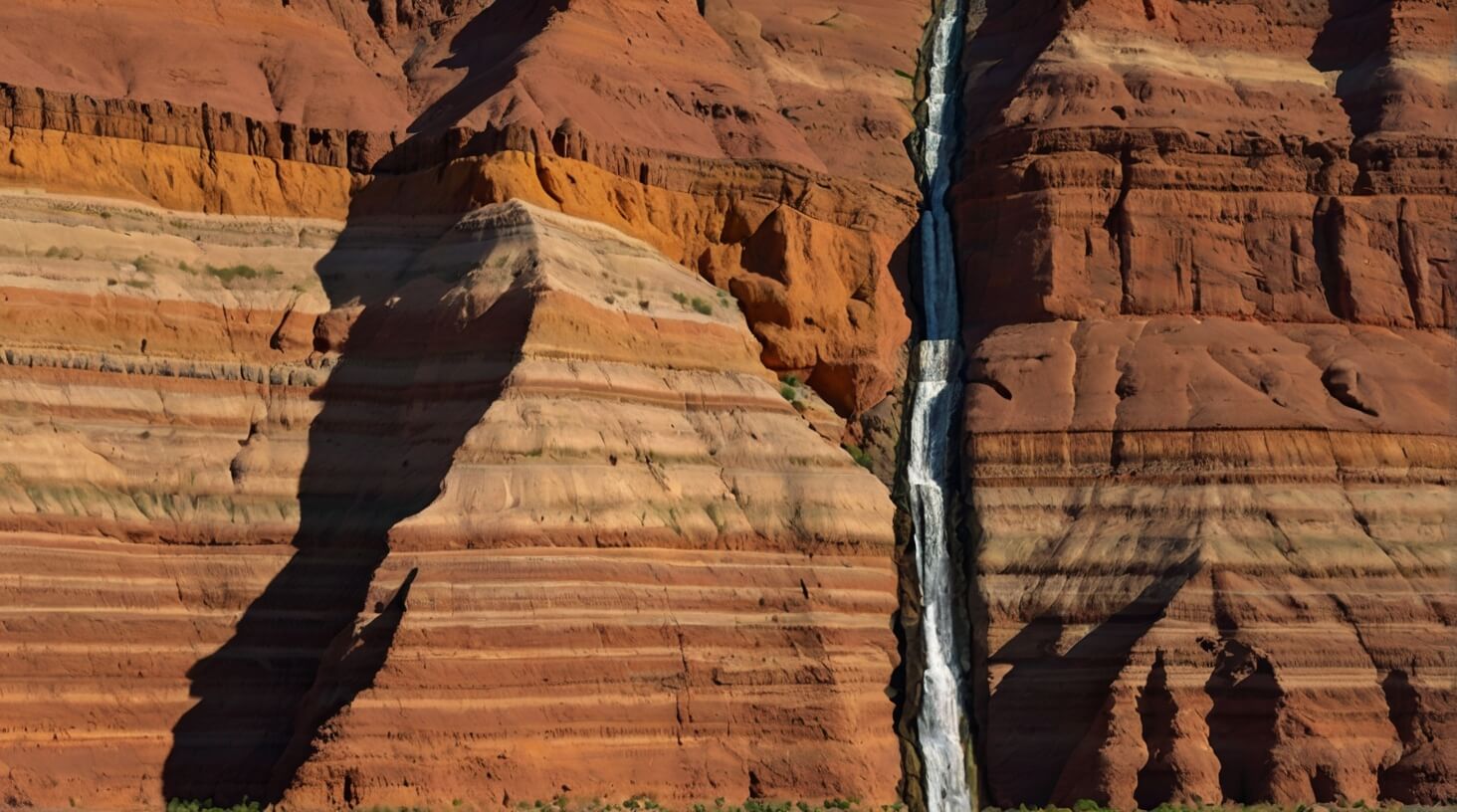
You’ve stumbled upon a tale as old as time itself, or at least as ancient as the Earth’s crust, when embarking on the journey to understand the age of Dades Gorges’ rock layers. Tracing the lineage back to the Precambrian foundation, through the Cambrian insights and the sedimentary secrets of the Ordovician, to the Devonian’s marine whispers, you’re about to uncover a narrative etched in stone. Yet, just as the erosive forces sculpted these marvels, the full story remains partially veiled, inviting you to explore the depths of time encapsulated within. Why stop now when history’s layers are just beginning to unfold?
Beneath the rugged landscape of the Dades Gorges, you’ll find the Precambrian foundation, a testament to Earth’s early geological history characterized by its complex rock formations and ancient origins. This foundation isn’t just a base; it’s a record of the intense tectonic activity and crystal growth that predates even the existence of life as we know it.
You’re looking at rocks that were formed over 4 billion years ago, during a time when the Earth was vastly different from today. The Precambrian era, devoid of the life forms we’re familiar with, was a period of raw geological processes. The tectonic activity of this era was monumental, involving the movement of the Earth’s crust in ways that shaped the very foundation of the Dades Gorges. The collisions and separations of early continental plates were not gentle events but were forces that forged the complex structures we observe today.
In this context, crystal growth played a crucial role. As magma from deep within the Earth cooled slowly, minerals had the time to form large, well-defined crystals. These crystals are integral to the Precambrian rocks, providing clues about the conditions under which they formed. The presence of certain minerals can tell you a lot about the temperature, pressure, and even the composition of the Earth’s crust at that time.
As you delve into the Precambrian foundation of the Dades Gorges, remember you’re exploring a world that predates trees, dinosaurs, and even the simplest forms of life. It’s a journey back to the Earth’s beginnings, driven by the freedom to understand our planet’s most fundamental processes.
Cambrian Period Insights
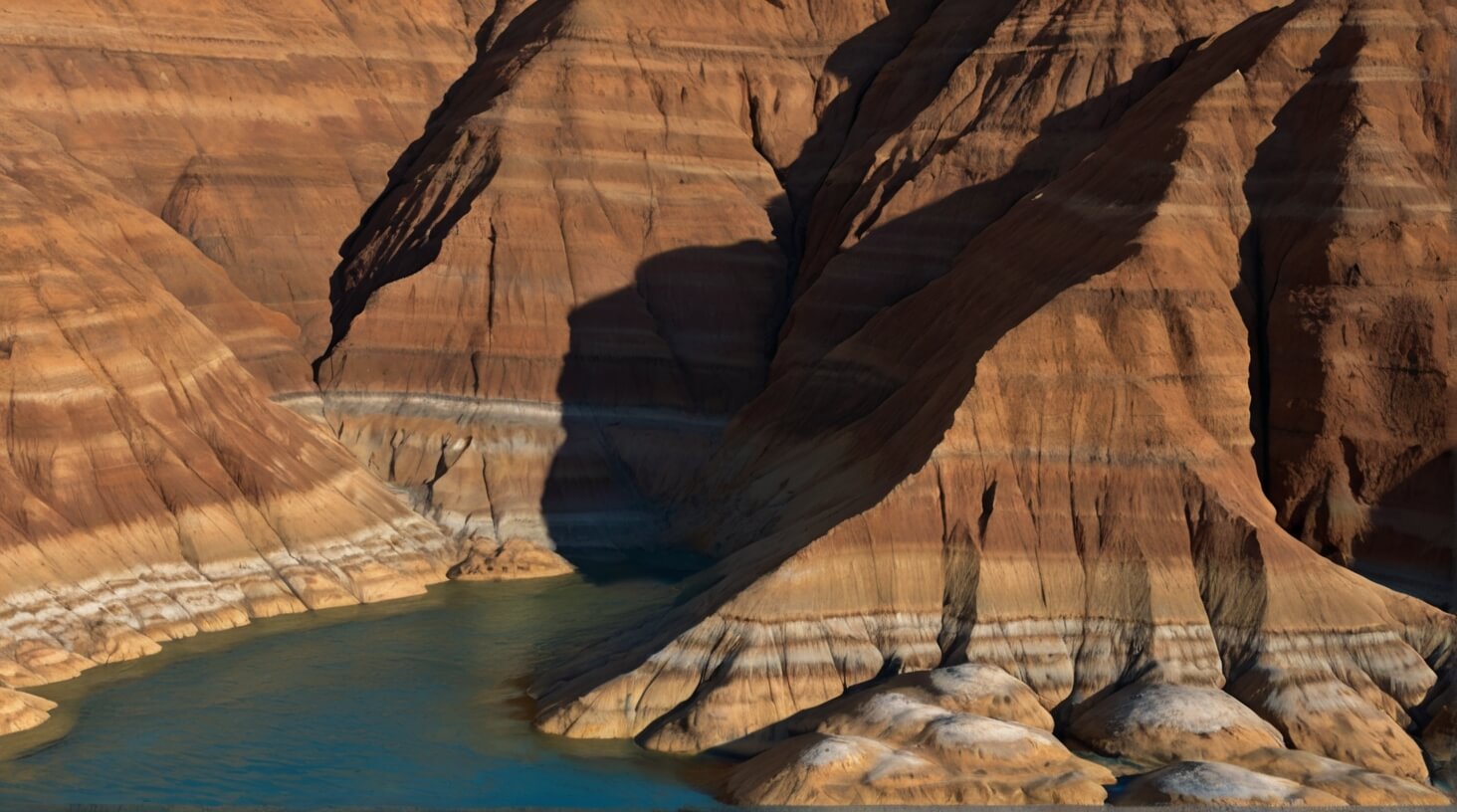
Transitioning from the Precambrian foundation, you’ll often find that the Cambrian period unveils a dramatic burst in biodiversity and complexity within the Dades Gorges’ rock layers. This era, significant for its profound evolutionary developments, marks a pivotal point in Earth’s history. The Cambrian explosion, as it’s aptly named, signals the sudden appearance of most major animal phyla, as evidenced by the rich tapestry of trilobite fossils embedded within these ancient strata. These fossils are not just remnants of a bygone era; they’re keys to unlocking the mysteries of early life and environmental conditions.
Diving deeper, you’ll uncover how the oxygen increase during this period played a crucial role. This uptick in atmospheric oxygen not only supported the burgeoning complexity of life forms but also catalyzed further evolutionary advancements. The trilobite fossils, with their varied and complex exoskeletons, stand as testaments to the adaptability and diversity of life spurred by this oxygen-rich environment. Their presence in the Dades Gorges rock layers provides invaluable insights into the ecological dynamics of the Cambrian seas.
Analyzing these ancient deposits, you’ll appreciate how the interplay between geological and biological processes shaped the planet’s evolutionary trajectory. The Cambrian period, with its trilobite fossils and oxygen increase, represents a chapter of profound transformation. It’s a period where life, as you know it, began to take shape, offering a glimpse into the Earth’s vibrant past. Through the lens of the Dades Gorges, you’re granted the freedom to explore this pivotal moment in time, piecing together the puzzle of our planet’s intricate history.
Ordovician Sedimentary Layers
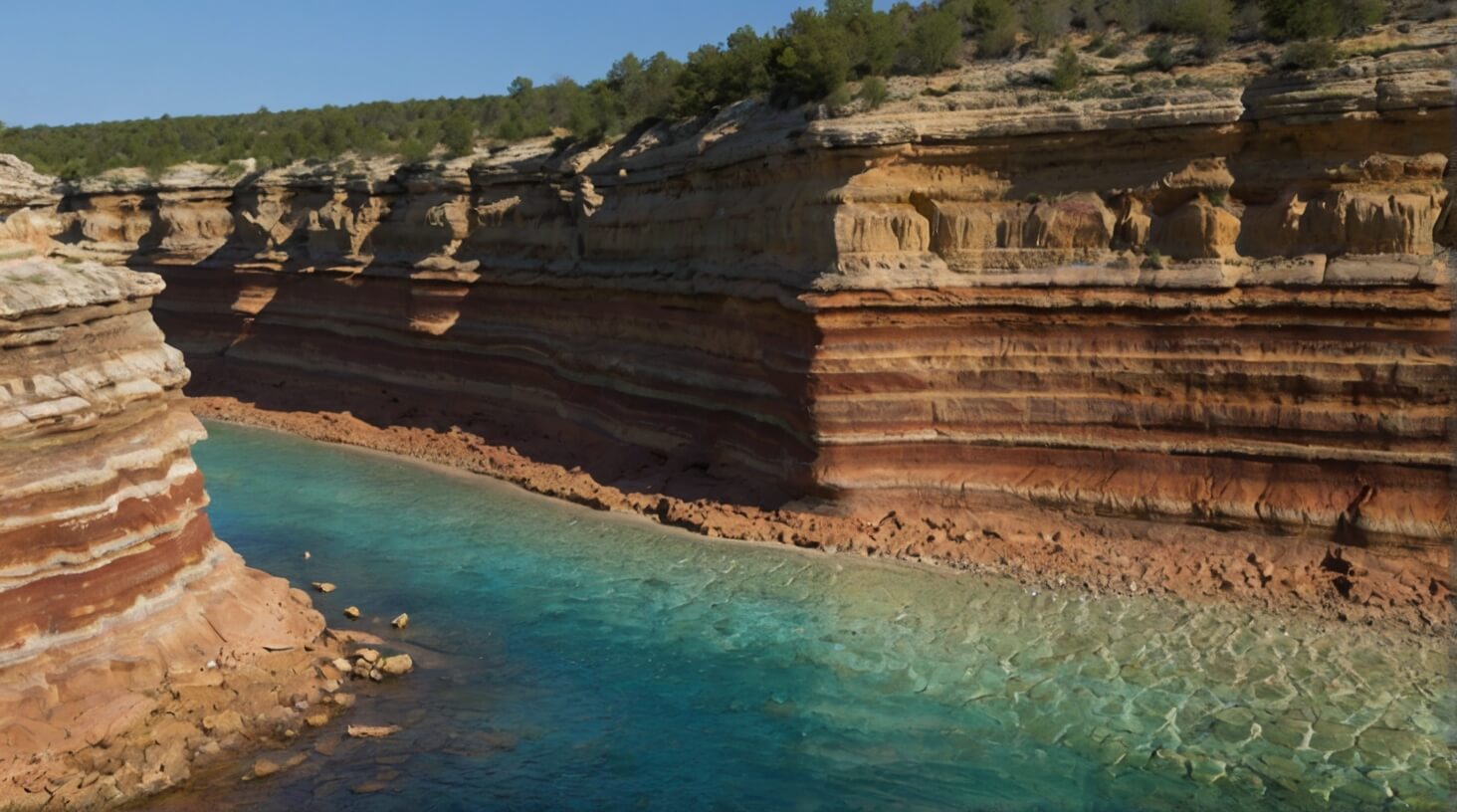
Following the Cambrian period, the Ordovician sedimentary layers of the Dades Gorges reveal a further evolution in Earth’s geological and biological narrative. You’ll find that during this era, the Earth was undergoing significant changes, not just in its physical landscape but also in the diversity of life forms. The sedimentary layers deposited in the Ordovician period are particularly rich in graptolite fossils, which serve as key biostratigraphic markers. These fossils, alongside the sediments they’re embedded in, tell a story of ancient oceans and the life within them.
Sediment compaction played a crucial role in the formation of these layers. As layers of silt, clay, and sand settled in the ancient seabed, they underwent compaction over millions of years, transforming into the solid rock layers you see today. This process, coupled with the presence of graptolite fossils, offers a window into the past environments and the conditions under which these rocks were formed.
To better understand the Ordovician sedimentary layers, consider the following table which highlights key aspects:
| Feature | Description | Significance |
| Graptolite Fossils | Abundant in Ordovician layers | Indicate marine environments |
| Sediment Type | Silt, clay, and sand | Reflects deposition in ancient seas |
| Compaction | High degree of sediment compaction | Influences rock texture and porosity |
| Biostratigraphy | Use of fossils for dating layers | Allows chronological correlation |
| Geological Activity | Formation of sedimentary layers | Records Earth’s dynamic processes |
This table encapsulates the essence of the Ordovician sedimentary layers in the Dades Gorges, illustrating their importance in unraveling Earth’s ancient history.
The Devonian Marine Influence
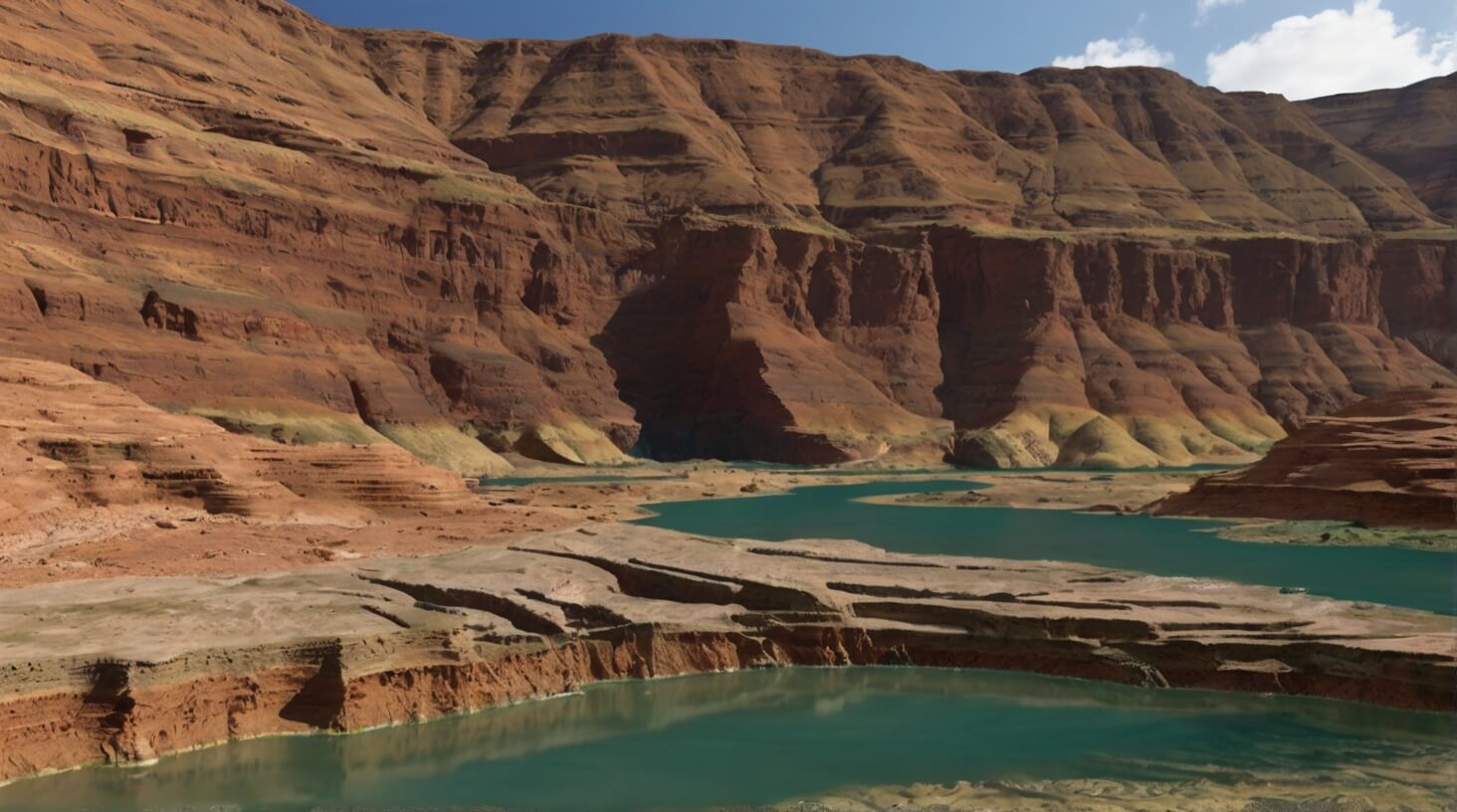
The Devonian period’s marine influence significantly shaped the sedimentary layers of the Dades Gorges, introducing a diverse array of marine life and geological formations. During this era, you’d observe the ocean advancing and retreating, leaving behind rich, layered narratives in the form of rock strata. These strata detail a time when marine fauna thrived, and environmental changes were rampant, marking a significant transformation in the landscape that you now admire in the Dades Gorges.
To truly grasp the Devonian’s impact, consider these key points:
- Diversity of Marine Fauna: The Devonian seas were teeming with life. You’d find everything from primitive fish, which were among the earliest vertebrates, to corals and trilobites. These organisms contributed to the rich fossil record preserved in the gorge’s layers, offering a window into past biodiversity.
- Formation of Limestone and Shale: As these marine creatures lived and died, their remains settled on the sea floor. Over millions of years, they were compacted and cemented, forming the limestone and shale that now constitute significant portions of the gorge’s geology. This process encapsulates the slow yet relentless pace of geological transformation.
- Evidence of Environmental Changes: The sedimentary record in the Dades Gorges also reveals periods of significant environmental change. Fluctuations in sea level, likely driven by global climate shifts, are recorded in the alternating layers of sediment. These changes had profound effects on the distribution and evolution of marine life, shaping the ecosystem dynamics of the Devonian seas.
Understanding the Devonian marine influence allows you to appreciate the forces that have sculpted the Dades Gorges, highlighting the intricate relationship between life and the earth’s geological processes.
Erosion and Modern Formation
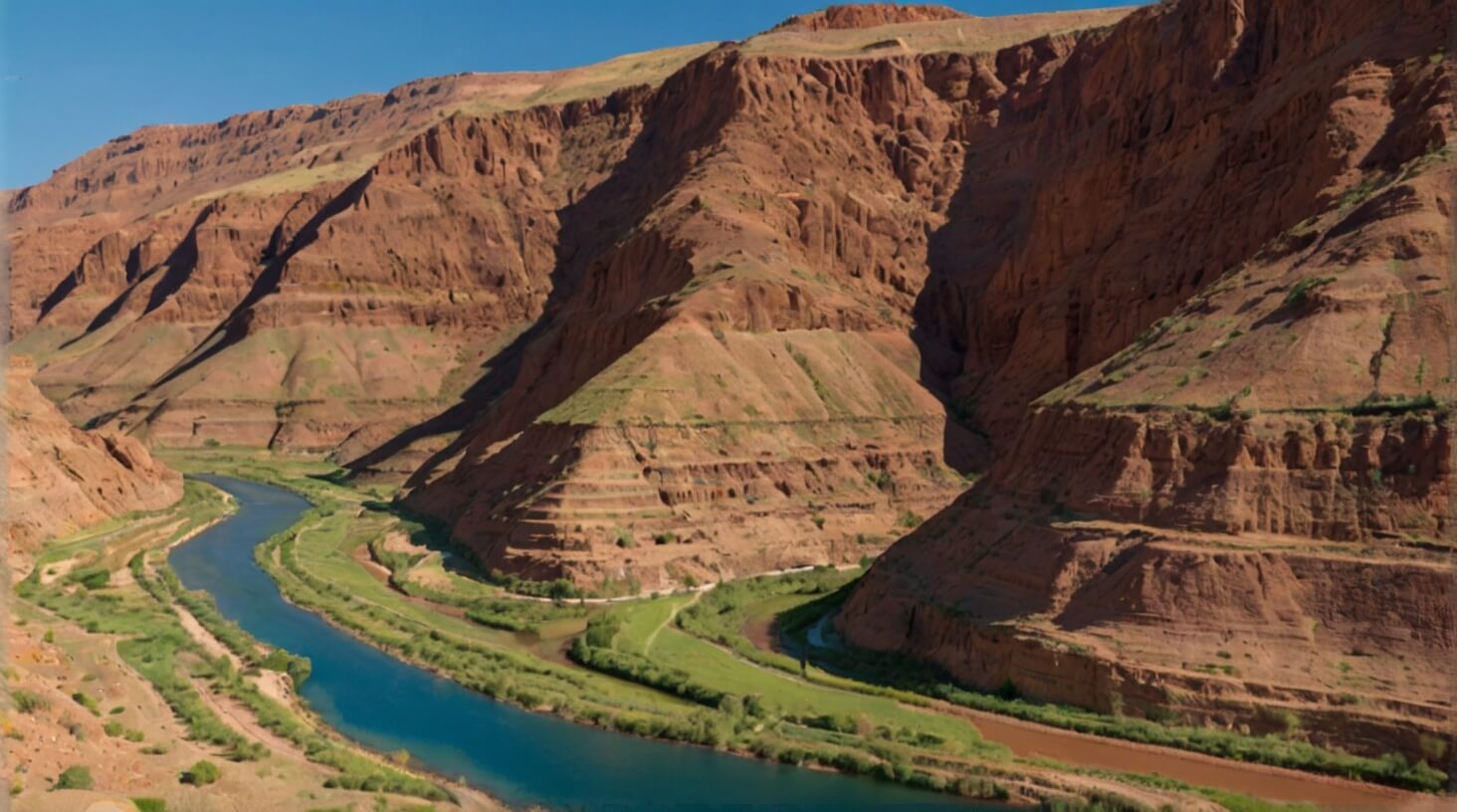
While the Devonian period laid the groundwork with its rich marine deposits, it’s the forces of erosion and subsequent geological activities that have sculpted the Dades Gorges into their present form. The relentless wear and tear by water, wind, and the freeze-thaw cycles have deeply incised the landscape, revealing the stunning stratigraphy we admire today. However, it’s critical to understand the intricate balance that has been maintained over millennia, and how climate impact and human activities are tipping the scales.
Erosion acts both as an architect and a record keeper, exposing layers of history while simultaneously crafting new features. Water, the most potent force, exploits the slightest weaknesses in rock, carving through layers deposited over 400 million years ago. Yet, this natural process is being accelerated by climate change. Increased rainfall intensity and unpredictable weather patterns exacerbate erosion, potentially leading to loss of invaluable geological records before they can be fully understood.
Human activities compound these challenges. Unregulated tourism, construction, and land use changes disrupt the natural processes, introducing new erosion dynamics. The removal of vegetation for agriculture or urban development exposes soil and rock, making them more susceptible to erosion. This not only alters the landscape but also threatens the region’s ecological balance and biodiversity.
As stewards of these geological marvels, it’s imperative to advocate for sustainable practices that minimize climate impact and human interference. Protecting the Dades Gorges requires a concerted effort to understand and mitigate the forces shaping their evolution. By doing so, you not only preserve a piece of Earth’s history but also ensure its freedom to continue its natural course of change.
Related Articles
Erosion History of Dades Gorges
Journey through time to unravel the erosion history of Dades Gorges, revealing Earth's dynamic forces at play.
Archaeological Findings in Dades Gorges
Immerse yourself in the mystery of Dades Gorges' ancient civilizations, where each artifact whispers secrets of a forgotten past.
Ecosystems Affected by Dades Gorges Geology
Peek into how Dades Gorges' unique geology shapes its vibrant ecosystems, inviting exploration into the delicate balance of life within.