
Lahsen
A passionate explorer weaving tales of the majestic landscapes and cultural treasures nestled within the rugged beauty of Morocco’s Dades Gorges.
Discovering Dades Gorges

Nearly 60% of the fossils discovered worldwide provide crucial insights into our planet’s past, and the recent finds in Dades Gorges are no exception. As you explore the significance of these discoveries, you’ll uncover the types of ancient life forms that once roamed this area, painting a vivid picture of an ecosystem that thrived millions of years ago. The findings not only challenge our understanding of historical biodiversity but also open new avenues for future research. Are you curious about how these discoveries alter our perception of Earth’s biological timeline and what secrets still lie buried in the gorges?
The exploration of Dades Gorges reveals a multifaceted geological history, marked by the relentless forces of water and wind sculpting its landscapes over millennia. You’ll find that the gorges serve as a vivid canvas, displaying the dynamic interplay between geological formations and the elements. This region’s dramatic cliffs and towering rock faces are not merely scenic wonders but also chronicles of the earth’s evolutionary saga.
Delving deeper, you’ll understand that the sculpted landscapes of Dades Gorges are a testament to the power of natural forces. The stratified rock formations, intricate erosional patterns, and sedimentary layers speak volumes about the area’s past. These geological features, ranging from ancient riverbeds to uplifted rock strata, offer invaluable insights into millions of years of Earth’s history. They are a record of the environmental shifts and the climatic changes that have shaped the region over eons.
Tourism effects on this delicate ecosystem, however, cannot be overlooked. While the influx of visitors brings a welcome economic boost to local communities, it also poses challenges. The increased human activity threatens the very formations and landscapes that attract tourists in the first place. It’s a delicate balance, managing the preservation of these natural wonders while accommodating the curiosity and desire for freedom that draws people from around the globe.
In essence, the discovery and ongoing exploration of Dades Gorges underscore the significance of protecting geological formations. They are not only marvels of natural beauty but also keys to decoding Earth’s deep past. As such, they demand our respect and careful stewardship to ensure they continue to enlighten future generations.
The Significance of the Find

You must understand that the fossils uncovered in Dades Gorges offer a window into the historical context of life millions of years ago, providing invaluable insights into the evolutionary timeline. Their discovery not only enriches our understanding of past ecosystems but also has a profound scientific impact, advancing our knowledge of biological diversity and evolutionary processes. This find, therefore, stands as a pivotal contribution to both the fields of paleontology and evolutionary biology, underscoring the significance of preserving such sites for future research.
Historical Context
Discovering fossils in the Dades Gorges significantly alters our understanding of the region’s prehistoric ecosystem and its place in the broader narrative of Earth’s geological history. This find not only enriches our knowledge but also intertwines with the effects on tourism and local heritage, highlighting the intricate relationship between historical discoveries and their impact on present-day society. The uncovering of these fossils serves as a testament to the area’s rich biodiversity, offering a lens through which we can explore the complex dynamics of prehistoric life. It challenges prior assumptions and invites a reevaluation of the ecological and biological developments over millennia. As such, this discovery does more than expand our scientific knowledge; it redefines the cultural and historical significance of the Dades Gorges, weaving a new thread into the fabric of our collective understanding of the past.
Scientific Impact
Building on the enriched understanding of Dades Gorges’ historical and ecological layers, it’s crucial to examine the profound scientific implications these fossil discoveries herald for our comprehension of prehistoric life dynamics.
- Refinement of Research Methodologies: These findings push scientists to refine their techniques, ensuring more accurate reconstructions of ancient environments.
- Evolutionary Insights: They offer unprecedented insights into the evolutionary pathways of extinct species.
- Climatic Patterns Analysis: By studying these fossils, researchers can infer past climatic conditions, enriching our understanding of Earth’s historical climate variability.
- Publication Controversies: The discoveries have sparked debates, highlighting the need for transparency and integrity in scientific reporting.
- Interdisciplinary Collaboration: They encourage collaboration across geology, paleontology, and climatology, fostering a holistic approach to Earth sciences.
These aspects underscore the significance of the Dades Gorges fossils, marking a pivotal moment in the pursuit of knowledge about our planet’s past.
Types of Fossils Unearthed
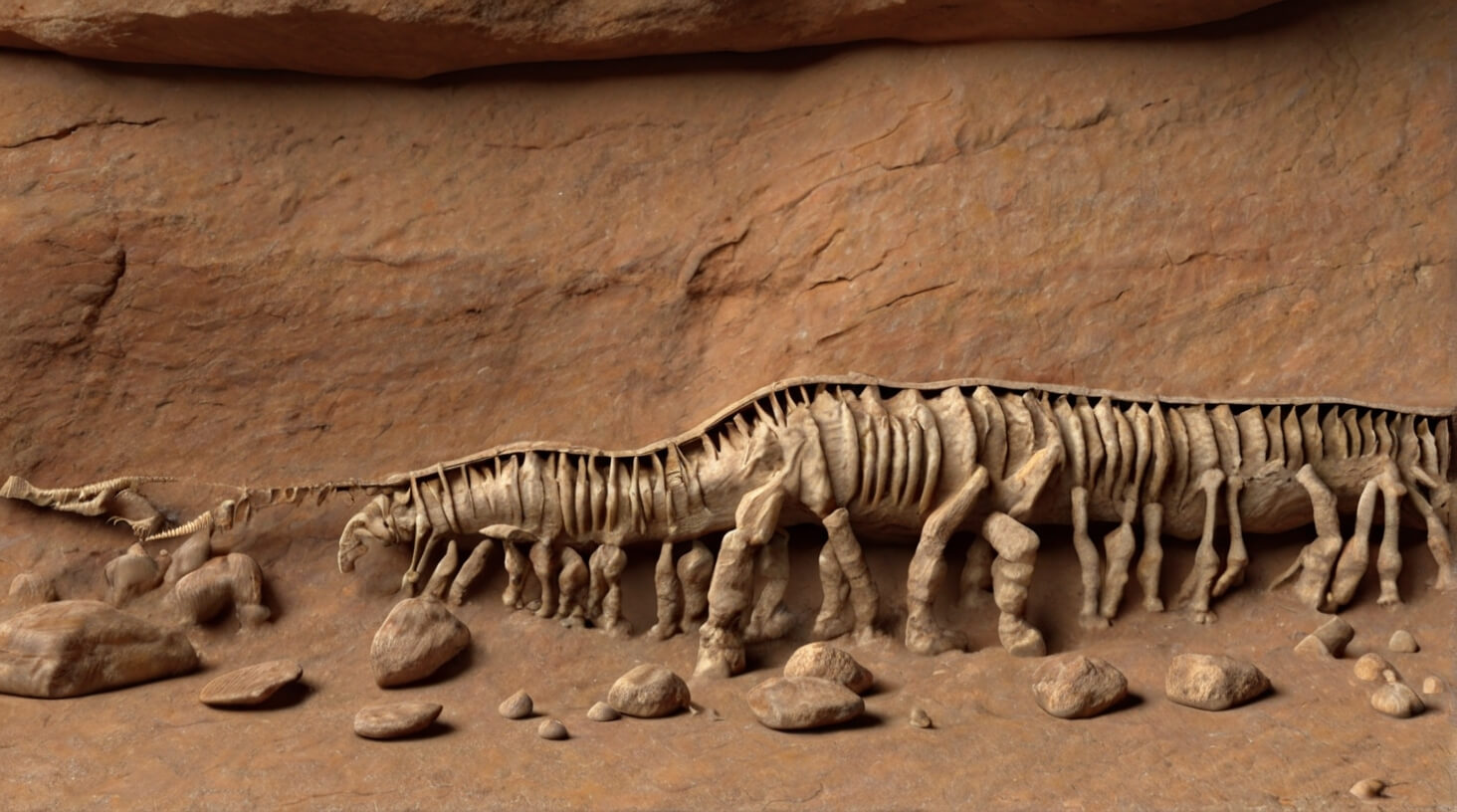
In the Dades Gorges, a multitude of fossils, including ancient marine life and dinosaur remains, have been meticulously unearthed, revealing a complex tapestry of prehistoric life. The success of these discoveries can largely be attributed to advanced fossil preservation methods and refined excavation techniques. These strategies have allowed researchers to extract and analyze specimens with minimal damage, ensuring the integrity of the fossils remains intact. This careful approach has led to the identification of several distinct types of fossils, each providing unique insights into the ancient world.
Among the finds, marine fossils are particularly abundant, including the likes of ammonites, trilobites, and various shellfish, which suggest a once-thriving aquatic ecosystem. These specimens are crucial for understanding the marine environments of the past and the creatures that inhabited them. Additionally, the discovery of dinosaur fossils, such as bones and teeth, offers a glimpse into the terrestrial inhabitants of the area. These remains are instrumental in piecing together the puzzle of dinosaur diversity and distribution during different geological periods.
The unearthed fossils also include plant material, which, although less visually striking than their animal counterparts, are equally significant. These fossils provide evidence of the vegetation that supported ancient ecosystems, offering clues about the climate and geography of the time.
The Dades Gorges fossils, thus, represent a diverse collection of ancient life forms. Through their study, you’re afforded a window into the complex interplay of ecosystems that existed millions of years ago. Each fossil, from the tiniest shell to the largest dinosaur bone, contributes to our understanding of Earth’s evolutionary history, underscoring the importance of preserving these natural archives for future generations.
The Ancient Ecosystem

You must consider the variety of prehistoric life forms uncovered in Dades Gorges as a window into an ancient ecosystem that was both complex and dynamic. Each fossil contributes to a broader understanding of past climate conditions, offering insights into how these environments shaped the evolution of life on Earth. Analyzing these findings, you’ll uncover patterns that reveal not only the biodiversity of the past but also the ecological processes that governed these ancient habitats.
Diverse Prehistoric Life
The Dades Gorges teemed with a rich tapestry of prehistoric life, showcasing an ancient ecosystem of remarkable diversity and complexity. This area’s unique geological formations have provided unparalleled opportunities for the preservation of specimens, offering invaluable insights into evolutionary theories. You’re witnessing a cross-section of time, where every layer tells a story of survival, adaptation, and eventual dominance or disappearance.
- Exceptional Specimen Preservation: A window into the past, revealing the minutiae of prehistoric existence.
- Insights into Evolutionary Theories: Understanding how life evolved over millions of years.
- Diverse Flora and Fauna: A testament to the adaptability and resilience of life.
- Complex Ecosystem Interactions: How species coexisted and influenced each other’s evolution.
- Biodiversity Over Time: The ebbs and flows of life diversity through prehistoric ages.
Each facet of this ecosystem offers a deeper understanding of freedom in the natural world, emphasizing the fluidity and interconnectedness of life.
Climate Implications
Analyzing the Dades Gorges’ ancient ecosystem reveals how shifting climates sculpted the biodiversity and survival strategies of its inhabitants. Through careful examination, you’ll find that these prehistoric shifts mirror today’s challenges with global warming. The fossil record suggests that past species had to adapt, migrate, or face extinction due to climatic changes, echoing the urgent need for contemporary policy changes to mitigate similar threats. This historical perspective underscores the importance of understanding and acting upon the implications of global warming. It’s not merely about preserving the past; it’s a clarion call for proactive measures to safeguard the future. By learning from ancient ecosystems, you’re equipped to advocate for and implement the necessary policy changes to combat the current climate crisis effectively.
Dating the Discoveries

Determining the age of fossils discovered in Dades Gorges relies on the application of radiometric dating techniques, providing scientists with precise chronological insights. These methods, including carbon dating, serve as the cornerstone for establishing the timeline of these ancient finds. You’re delving into a realm where scientific precision meets the quest for understanding our planet’s past. Radiometric techniques offer a window into the age of these fossils, employing the decay rate of radioactive isotopes as a natural clock.
The use of carbon dating, specifically, allows researchers to date organic materials up to about 50,000 years old, a method pivotal for younger fossils. However, for older discoveries, other radiometric strategies are employed, each tailored to the specific isotope composition of the sample. This multidisciplinary approach ensures a robust and reliable dating framework, essential for constructing an accurate historical narrative of life on Earth.
- Radiometric techniques provide a reliable measure of time, extending far beyond the limits of human history.
- Carbon dating is instrumental for dating recent fossils, offering a glimpse into relatively recent prehistoric life.
- Analytical precision in these dating methods allows for a detailed reconstruction of the Earth’s past environments.
- Scientific freedom in choosing the appropriate dating technique fosters a deeper understanding and appreciation of the complexity of Earth’s history.
- Chronological insights gained from these methods underpin our broader understanding of evolutionary processes.
In this scholarly endeavor, you’re witnessing how the meticulous application of radiometric dating techniques, including carbon dating, unveils the chronology of life’s tapestry woven into the Dades Gorges. This analytical journey not only dates discoveries but also enriches our comprehension of Earth’s biogeographical history, offering freedom from the constraints of time.
Impacts on Paleontology

How does the application of radiometric dating techniques revolutionize our understanding of paleontology, particularly through the lens of discoveries in Dades Gorges? By pinpointing the age of fossils with unprecedented accuracy, these methods have illuminated the evolutionary timeline, offering a clearer view of life’s history on Earth. The Dades Gorges fossils, with their precise dating, serve as a keystone, bridging gaps in our knowledge and challenging previously held assumptions.
The impact of these discoveries extends beyond academic circles, fostering educational outreach and enriching museum exhibitions. By bringing the past to life, they inspire a sense of wonder and curiosity, encouraging the public to engage with science in new and meaningful ways.
| Impact Area | Description | Example from Dades Gorges |
| Educational Outreach | Enhances science literacy among the public | Workshops and seminars using Dades Gorges discoveries |
| Museum Exhibitions | Provides tangible connections to the past | Interactive displays featuring fossils from Dades Gorges |
| Scientific Research | Advances understanding in paleontology | New theories on species evolution based on dated fossils |
These contributions underscore the importance of paleontological research in Dades Gorges, emphasizing not just its academic value but its role in enlightening society. By demystifying the science behind dating techniques and sharing findings in accessible ways, it champions the freedom of knowledge, inviting everyone to explore the depths of our planet’s history.
Future Research Directions

Building upon the solid foundation of radiometric dating’s impact on our understanding of the Dades Gorges fossils, we must now explore potential avenues for future research in this intriguing field. As you’ve seen, the fusion of traditional paleontological methods with cutting-edge technologies has unlocked new horizons. But to truly leverage this newfound knowledge, a strategic approach towards future investigations is vital.
Here’s where your curiosity and desire for discovery must tread new paths:
- *Comparative studies* between the fossil records of Dades Gorges and other similar geological formations worldwide to identify patterns or anomalies in ancient biodiversity.
- Development of *advanced excavation methods* that minimize damage to the delicate fossils, ensuring that much more of our prehistoric heritage can be preserved and studied.
- Integration of *multidisciplinary approaches* combining paleontology, geology, and new technologies like 3D scanning to create a more holistic view of the past environments.
- Exploration of *microfossil analysis* to provide insights into the smaller, often overlooked, components of the ecosystem that played crucial roles in shaping the ancient landscapes.
- Engaging with *indigenous knowledge and folklore* to uncover potential leads on fossil sites that have been known to local populations for generations but remain undocumented in scientific literature.
Each of these avenues not only broadens our understanding of the Dades Gorges but also enriches our appreciation for the intricate tapestry of life that has woven its narrative through the eons. As you venture forward, remember, it’s not just about uncovering the past; it’s about unlocking the doors to understanding our place within the natural world.
Related Articles
No Results Found
The page you requested could not be found. Try refining your search, or use the navigation above to locate the post.